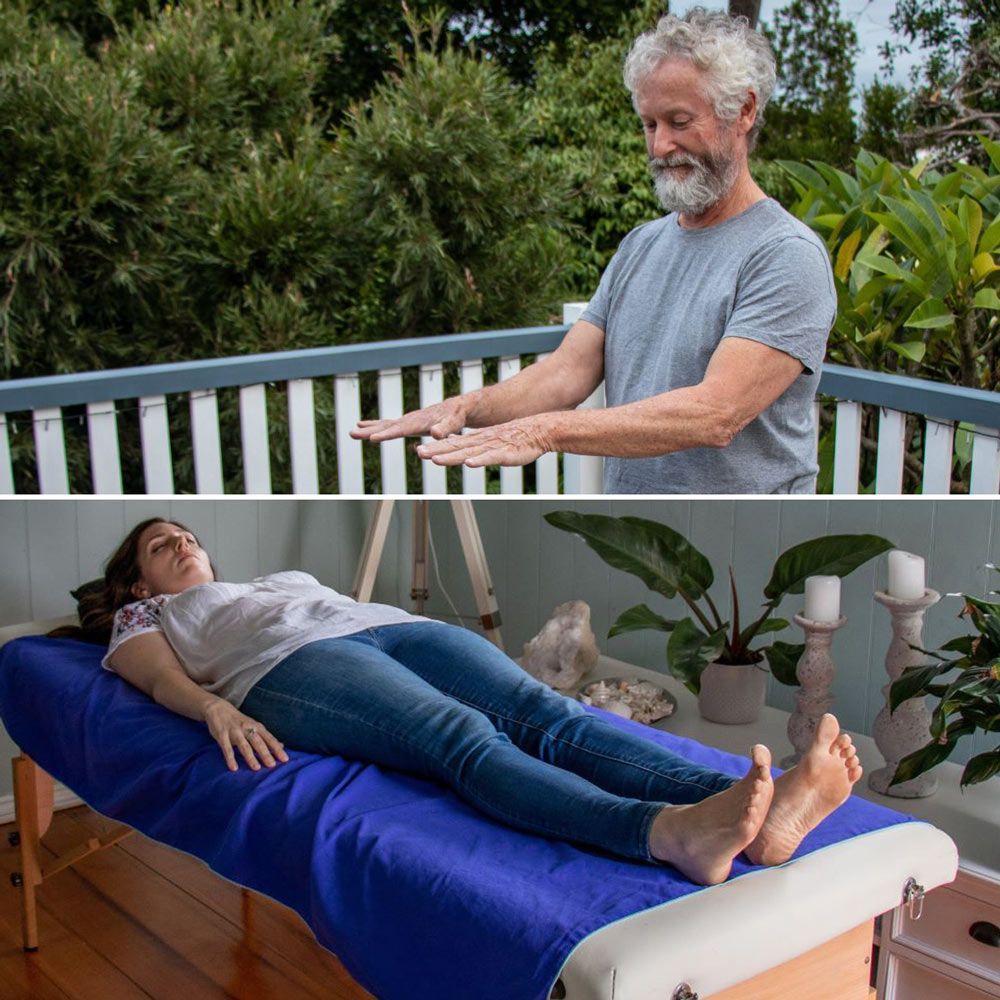
Acceptance: The First Step Toward Real Change

Robert Ogilvy • November 1, 2024

Acceptance: The First Step Toward Real Change

“I don’t want to accept my health issues, emotional struggles, or stress. I just want to get rid of them.”

This sentiment is completely understandable. Most of us don’t want to “accept” what feels burdensome or painful. The urge to simply get rid of problems is natural. We want relief, and we want it fast. However, this resistance to acceptance can often leave us feeling even more stuck. The key difference between “getting rid of” an issue and “letting it go” lies in our approach. And it’s often acceptance—not avoidance—that becomes the essential first step.


The Misunderstood Power of Acceptance

Acceptance isn’t about giving up or resigning ourselves to a lifetime of struggles. Instead, it’s a process of understanding and acknowledging our issues, which can ultimately help us to let them go. The paradox here is that in order to release something, we must first allow it to be present. We have to face it and understand its roots rather than pushing it away. This isn’t to say that we’re “embracing” our issues or inviting them to stay forever—it’s more like we’re choosing to see and understand them without judgment.


For instance, when it comes to health concerns, emotional problems, or chronic stress, acceptance involves cultivating a curiosity about where these issues come from and why they’re there. We might ask questions like, “Why has this happened to me? What deeper part of me might be holding onto this, even if I consciously wish it were gone?”


Cultivating Curiosity and Understanding

True acceptance starts with curiosity. Instead of simply labeling issues as “bad” and wishing them away, we can become interested in them. Where do these feelings or symptoms originate? What part of us might want something different than what we think we want? Often, our minds and bodies develop coping mechanisms that, at one point, helped us survive physically or emotionally. The mind holds onto certain patterns because, at one time, they kept us safe. Understanding this history can help us view our issues with compassion rather than judgment.


Letting go of resistance to a problem involves allowing answers to bubble up on their own. Instead of trying to force solutions, we create space for insights to arise naturally. When we ask these questions and give ourselves room to receive answers intuitively, we start to see the problem as something that once served a purpose, even if it no longer benefits us.


Why Avoidance Won’t Work

Sometimes, we try to ignore or bury our issues rather than confront them. Self-medicating is a common form of this avoidance—whether through alcohol, food, screen time, or other distractions. While these approaches may offer temporary relief, they tend to mask the issue rather than address its root cause. Over time, avoidance can make the problem worse, as the unresolved emotions, stresses, or physical issues continue to build up in our bodies and minds.


Seeking external solutions without engaging with our own internal world can also limit the effectiveness of any healing journey. Going to a professional and expecting them to “fix” everything for us can become another form of avoidance. Real change requires that we actively engage in our own healing process. Professionals can offer guidance and support, but lasting transformation often starts from within.


How Body Flow Energetics Can Help

One approach that supports this internal process is Body Flow Energetics. This method works by helping us “connect the dots” between our symptoms and their underlying causes, allowing us to see a fuller picture of why we may be experiencing certain challenges. Often, our subconscious mind holds information that our conscious mind is unaware of. With techniques like kinesiology, we can bring this subconscious knowledge to the surface.


Through kinesiology, the conscious and subconscious minds begin to align, allowing us to gain deeper insights into our issues. This alignment can prepare us for the real work of “letting go,” as we’re no longer operating with conflicting intentions. Once we have an understanding of what’s truly going on, we’re better equipped to release old energy patterns and beliefs that no longer serve us.


The Process of Letting Go

Once we’ve reached a place of understanding and acceptance, the process of letting go can begin. This often involves what’s called release work, where we intentionally clear out stored energy and emotional blockages. Our bodies hold onto old emotions, tensions, and trauma, which can affect our mental and physical health. Releasing this built-up energy creates space for new, healthier patterns to emerge.


This isn’t a “one-and-done” process. Letting go is a gradual journey that might involve multiple sessions of energy work, self-reflection, and other forms of inner healing. Each time we release a bit more, we make space for greater self-acceptance, freedom, and peace.


Embracing Self-Acceptance

The final step in this journey is self-acceptance. As we let go of old beliefs, we begin to understand ourselves more deeply and approach our lives with greater compassion. Self-acceptance means honoring our entire journey—recognizing both the struggles we’ve faced and the progress we’ve made. This acceptance allows us to let go of the need for perfection or the unrealistic goal of “getting rid” of everything we dislike about ourselves. Instead, we can approach life with openness and resilience, ready to face whatever comes our way.


Acceptance isn’t always easy. It requires patience, curiosity, and sometimes a willingness to face uncomfortable truths. However, the rewards are well worth the effort. By accepting our current reality, we empower ourselves to change it. And as we shift from a mindset of resistance to one of openness, we discover that the very things we once tried to avoid become pathways to growth, healing, and lasting inner peace.


For those interested in exploring this journey of acceptance and release, Body Flow Energetics and kinesiology can be powerful tools. I’m here to support you in this process, helping you gain insights and find freedom in letting go. Let's connect to learn more about how we can work together to help you embrace acceptance and begin your journey toward a healthier, happier life.

By Robert Ogilvy August 17, 2026
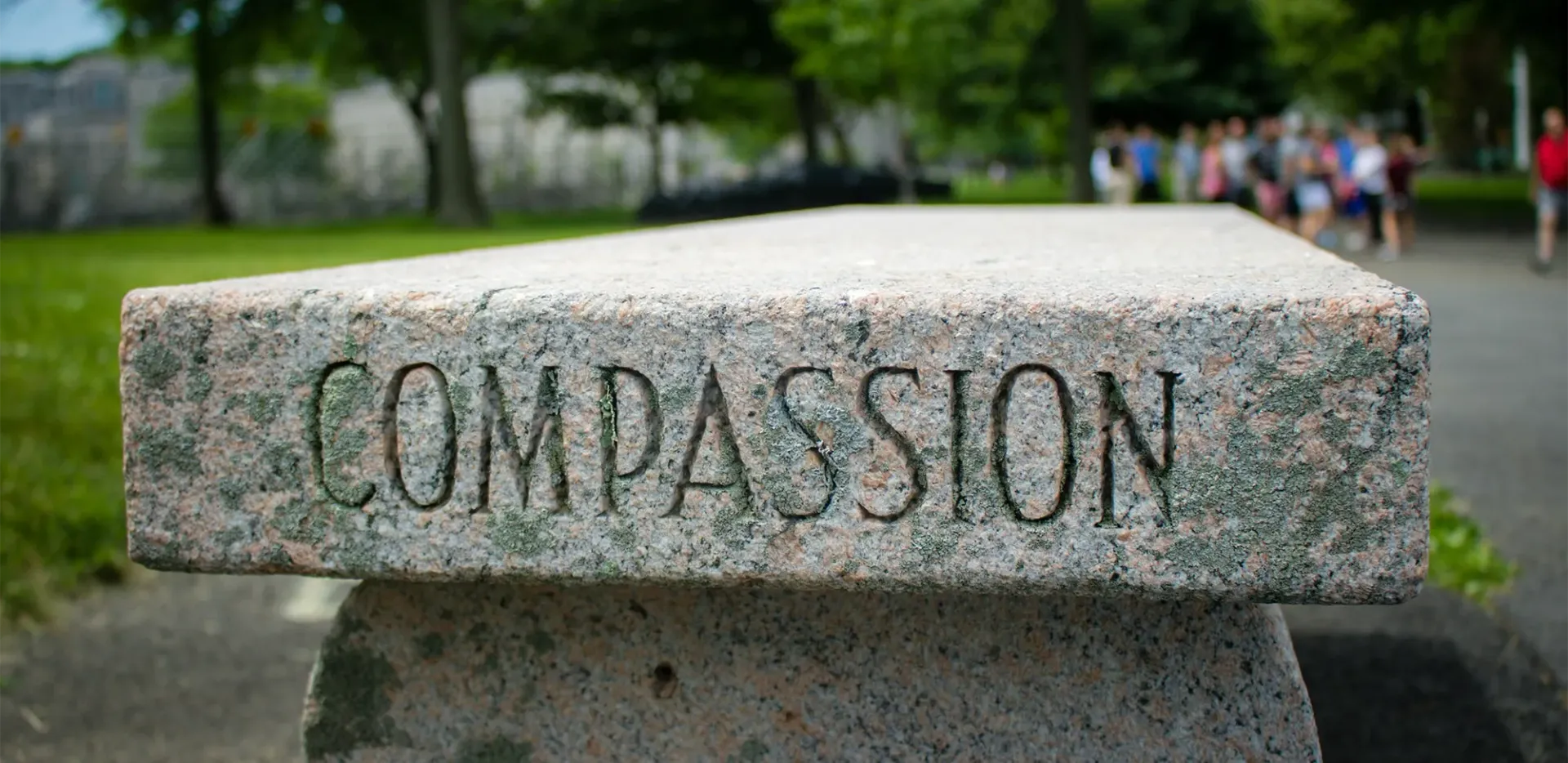
What is compassion? Is it feeling sorry for ourselves? Is it pity? When we pity someone else we place ourselves above them, “poor so and so, I wouldn’t want to be having their life.” When we pity ourselves, it is also very negative, “it’s unfair what is happening to me, I don’t deserve the life I’m having, I’m being treated unfairly.” Or we beat ourselves up, why can’t i just get my act together, why can’t I control my habits, why am I so weak etc. Compassion is very different to the above.It isn’t negative and it isn’t passive. When we talk about compassion for others is it just for our friends, family, or people we like? That isn’t too hard. What about people who have hurt us, like our ex or someone who hurt us today? That’s hard. Some people would say too hard. Is it? The prefix com has the meaning of with, together, jointly. The word passion means a strong feeling or emotion. Lets examine. Self-Compassion What about self-compassion then? Can we feel that when we are beating ourselves up about our faults or the direction of our life? The answer is no. When we practice self-compassion, we are more able to accept our circumstances as they are and as we are, we are then in a calmer state and sometimes see more clearly the best way to deal with our problems. When we pity ourselves or our lot in life or feel sorry for ourselves we isolate ourselves and we feel lonely. When we practice self-compassion we see that suffering in some way or some of the time is part of the human condition and is experienced by all to some degree. That helps us to put our own problems in a proper perspective, we are not alone, we stand with all of humanity. It helps us to open up to others, we see they are in pain on some level and we feel connected to them. We are not alone. There are many other aspects to this quality, for example, forgiveness. When we are able to forgive ourselves then we are more able to be forgiving of others. When we practice self-compassion we are able to open up to feelings of gratitude. Yes, our situation might not be ideal but we are cared by how we feel toward our self and that’s something to be grateful for. We are also able to deal with others in a more compassionate way and that results in us having more meaningful relations with others and an increased level of satisfaction with ourselves and our life. How Do I Practice Compassion?? Great!! But how do I practice compassion? It begins with our acceptance of this as a way of going about our life. It can be as simple as putting our hand on our heart and reminding ourselves to be kind to ourselves and others. A woman came to see me a while back and explained that her son in his thirties had schizophrenia and lived with her. He was not treating her well and her friends had advised her to kick him out. I disagreed. People with mental health issues can be aggressive but they are also very sensitive. We talked about compassion and she came back next time and said her son was treating her differently and she couldn’t understand the change. He had picked up the change in how she felt and dealt with him although she hadn’t been consciously aware of it. Buddha taught a form of meditation called Metta, it means loving-kindness and is all about compassion, I recommend it. The feeling to bring up is like when we see a baby, smile and they smile back. It’s a very good feeling. We can invoke that without doing a formal meditation and in situations that are difficult. We can also send that feeling to someone we are dealing with and the results can be amazing. Personally, what helped me when I’ve gone through difficult times has been my belief that the universe is structured in macro and micro ways that are intricate patterns that are affected by how we think, feel and go about our lives. That it is always presenting opportunities for us to grow and that if we can be more tuned in to them our life can improve. Carl Jung called them synchronicity. We can’t always understand how they fit into the life we are experiencing but if we stay alert, we will see evidence of it all around us. So compassion can be easy to practice and it can be very difficult to practice but the more we can learn to practice it for ourselves and for others the richer our life can become. I’m not a meditation teacher but I can help if you have emotional blocks to showing compassion in certain situations but that does involve your being willing to at least consider letting go of what is holding you back. We have all had experiences where we were not shown compassion by others, they might have been our family or others in our childhood or adult life. The message from these experiences can remain in our emotional memory and energetic system and make it difficult for us to be compassionate toward ourselves and others. The good news is when we understand this we can by ourselves or with the help of someone doing energy work let go of this conditioning and free ourselves to have a richer and more loving life. It is what I wish for you. Energeticsbyrob.com.au
By Robert Ogilvy August 17, 2026
It comes in different forms, acute pain, physical pain, emotional pain, chronic pain. It carries different messages, something is physically wrong with you, this demands your immediate attention, something else is wrong, you need to listen up or change or maybe accept and feel it as in grief. It can be your friend or your worst enemy. It can wear you down over time and take away your joy of living. It can have a simple explanation, you have broken a bone, it can defy all the medical tests and refuse to say why you have it. It can be a real mystery. Fibromyalgia is an example of this but it can also be just one area in the body for no apparent reason or pain that comes and goes or you feel it in one area of your body and later in another area. Have you been told that your back pain is caused by a degenerated or herniated disk or a scoliosis and yet there are many cases of people who have these conditions but do not have pain. I was told by a chiropractor that I would always have back pain from a degenerated disk and a scoliosis but apart from muscular pain if I overwork muscles that aren’t toned, I have not had any back pain for more than five years. What is going on? The answer lies in the interaction between our brain, specifically what we call the limbic or mid brain and our body. That part of the brain operates “under the radar” of our conscious mind. It performs many functions but an important one is to protect us and ensure our survival but it doesn’t have reasoning ability like our frontal cortex, so it doesn’t always get this right. When we injure ourselves the body sends a message to this part of our brain and it responds by sending a pain signal so we can get help. When something is not right in other ways, say we have unresolved emotional trauma from our childhood or our adult life or we have some conflict going on in our psychology that needs to be resolved parts of the limbic brain will send pain messages that present as physical pain in an effort to ensure our physical or emotional survival. If we don’t respond to those pain messages because we don’t get what they are connected to then the brain will continue to send the messages. Over time a neural pathway is developed and it becomes the path of least resistance, like driving on a dirt road where previous cars have worn a path for their tires. What can we do? In his groundbreaking book, Heal your back pain, Dr John Sarno taught that often just being aware of this neural habit and recognizing that there isn’t anything physically wrong, accepting that it is just our brain trying to protect us and switching our attention to something else can with some time form a new neural pathway that doesn’t have physical pain as its destination. That isn’t always the case and then it can still be resolved by addressing the trauma or conflict that we hold in our body and our subconscious mind. Kinesiology can be a very helpful tool for, with the aid of a practitioner, tapping into our subconscious mind and our body and understanding the emotions and beliefs that have been generated by traumatic experiences. They know what this is about. Modalities like Havening that I facilitate can also help to process and let go of these emotions so there is no longer a need for the pain signal. Energeticsbyrob.com.au
By Robert Ogilvy June 27, 2025
When you’re sensitive, you pick up on things others might miss. The subtle changes in someone’s tone, the energy in a room, the beauty in the little details. When the world is offering up joy or connection, we feel it deeply and it’s wonderful. But there’s a flip side too. When something negative happens, when someone says something hurtful or dismissive, we feel that deeply as well. We might want to block it out, push it down, pretend it didn’t affect us… but it lingers. Sensitivity means we carry things, sometimes long after they’ve passed. So What Can We Do? For me, the answer is this: feel into the pain, honour it, and then consciously choose to let it go. It’s a practice. Not something that happens overnight, but something we return to again and again. Over time, the energy starts to shift. It softens. Many of us have learned to put up walls to protect ourselves. But those walls don’t really stop the hurt. Instead, they limit our freedom. They disconnect us from others, block our natural flow, and leave us feeling confused or out of alignment. It’s also helpful to remember that sometimes, it’s not even about us. Often, it’s their pain being projected onto us. Can you see that? Can you hold compassion for them, even just a little? Can you recognise their struggle? In Buddhist teachings, there’s a practice called Metta, which means loving kindness. When I feel stuck, I send loving kindness to the person or the situation. I imagine that energy going out, softening what felt heavy or stuck. And if you’re finding it difficult to move through it, you're not alone. Sometimes old energy gets lodged deep, especially if it comes from early life experiences. If that feels familiar, come and see me. We can work together to gently clear what’s no longer serving you and create space for something lighter to come in.
By Robert Ogilvy January 8, 2025
Reiki, established by Mikao Usui in Japan during the 1920s, is a widely recognised energy-healing practice. It involves identifying and clearing energy blockages by channelling universal energy, promoting balance and harmony in the body and mind. While not formally acknowledged by Western medicine, many have found Reiki helpful for improving their overall well-being. If you’re searching for alternatives to Reiki in Brisbane, there are several powerful energy-healing modalities to explore. Each offers unique approaches to addressing energy imbalances and supporting emotional and physical health: 1. Havening Techniques Havening is an innovative technique designed to release emotional connections to traumatic memories stored in the brain’s amygdala. Through gentle touch and specific protocols, it helps soothe the nervous system, reduce stress, and promote emotional resilience. Havening is particularly effective for letting go of past experiences that continue to impact your well-being. 2. Tension & Trauma Releasing Exercises (TRE) TRE is a simple yet effective set of exercises that activate the body’s natural tremoring mechanism to release tension, stress, and trauma. This process, used by mammals in nature, is a safe way to downregulate the nervous system and restore a sense of calm. Many people find that TRE helps them move from feeling overwhelmed to experiencing balance and control in their lives. 3. Kinesiology Kinesiology is a holistic modality that uses muscle testing to access the subconscious mind, uncovering hidden causes of emotional, physical, or energetic blockages. By addressing these underlying issues, kinesiology helps to align the conscious and subconscious mind, facilitating deep and lasting healing. 4. Other Energy-Healing Modalities In addition to these techniques, there are other energy-based approaches that focus on releasing stuck energy and enhancing overall well-being. These modalities are tailored to meet individual needs, addressing a range of challenges to help you achieve balance and harmony. If you’re exploring energy-healing options in Brisbane, these modalities provide alternative paths to wellness, each with its own unique benefits. Whether you’re seeking relief from stress, resolving trauma, or simply aiming to feel more balanced, these approaches can support you on your journey. If any of these resonate with you, I’d love to help you work towards a more balanced, calm, and fulfilling life experience. Let’s take the first step together.
By Robert Ogilvy November 22, 2024
Havening is a science-backed somatic process that addresses trauma embedded in our nervous system. These deeply ingrained experiences often manifest as stress and difficulties in our daily lives. Havening can help not only to resolve past traumas but also to manage challenging events as they arise in the present. Furthermore, it can positively influence our future by reinforcing affirmations aligned with the life we desire or the person we aspire to be. Developed by Dr Ron Ruden, Havening is the product of years of research into the connection between the brain and body in healing trauma. Dr Ruden was inspired by energy healers who achieved significant results despite lacking scientific explanation. He embarked on neurological research to uncover how somatic techniques—methods involving the body—could facilitate healing from trauma. His findings revealed a process that effectively clears the emotional charge of traumatic memories stored in the amygdala, the part of the brain responsible for processing fear, anger, and other emotions. After a Havening session, individuals typically still remember the traumatic event, but the associated emotions—fear, anger, or shame—are neutralised. This allows people to move forward without the weight of these unresolved feelings affecting their current lives. The Science Behind Havening Havening works by leveraging the brain’s neuroplasticity, or its ability to rewire itself based on new experiences and stimuli. When a traumatic event occurs, the amygdala encodes emotional and sensory details, often attaching intense feelings to the memory. These feelings can resurface when triggered, creating stress and impeding daily life. The Havening process uses gentle touch combined with focused attention to signal safety to the brain. This disrupts the link between the traumatic memory and its emotional response, effectively "deactivating" the amygdala's reaction. As a result, individuals experience relief from the emotional pain tied to past events. Havening has been validated through thousands of case studies, demonstrating its effectiveness in addressing traumatic memories, reducing anxiety, and fostering emotional resilience. How Havening Can Be Used Havening has diverse applications and can support healing and growth in several ways: Healing Past Traumas Many people carry the emotional scars of past events, whether from childhood, relationships, or major life upheavals. Havening helps process and clear the emotional pain attached to these memories, creating space for greater peace and freedom. Managing Current Challenges Life often throws unexpected challenges our way. Havening provides a way to address these situations as they arise, preventing them from becoming ongoing stressors. Shaping a Positive Future Beyond resolving trauma, Havening can help reinforce positive affirmations and intentions. By aligning your nervous system with your aspirations, you can cultivate resilience and confidence as you work towards your goals. Three Ways to Practise Havening There are three main ways to practise Havening, ensuring accessibility and flexibility for different needs: Practitioner-Led Havening In this method, a certified practitioner performs Havening directly on the client. This allows the client to fully relax while the practitioner guides the process for maximum effectiveness. Guided Self-Havening In this approach, the practitioner teaches the client to perform Havening on themselves during a session. This method empowers clients to take an active role in their healing journey. Self-Havening at Home After learning the technique, clients can practise Havening on their own at home. This makes it a valuable tool for ongoing self-care and stress management. Each method is designed to suit individual preferences and situations, making Havening a versatile and accessible process. Transform Your Life with Havening If you’re feeling stuck, weighed down by past experiences, or struggling to move forward, Havening offers a powerful pathway to healing and transformation. By addressing unresolved emotions that hinder progress, this technique can help you experience life with greater clarity, calm, and purpose. Working with a certified practitioner ensures you receive personalised guidance tailored to your unique circumstances. You’ll also gain the tools to practise Havening yourself, empowering you to continue the work independently and make it part of your daily routine. Ready to Start Your Havening Journey? If you’re ready to let go of past traumas, overcome current challenges, or create a brighter future, I’m here to support you. Together, we’ll work to enhance the quality of your life experience, helping you feel more aligned, confident, and empowered. I can guide you through the Havening process and teach you how to integrate it into your everyday life for long-term benefits. Whether you’re seeking healing, growth, or both, Havening is a science-backed solution to help you thrive. Let’s begin this journey together. Contact me today to explore how Havening can transform your life.
By Robert Ogilvy November 1, 2024
Understanding and Managing Chronic Fatigue and Fibromyalgia
By Robert Ogilvy November 1, 2024
Understanding Body Language: How Your Body Communicates in Energy
By Robert Ogilvy November 1, 2024
Understanding Anxiety: How It Protects Us and When It Becomes Harmful
By Robert Ogilvy November 1, 2024
Distance Healing: Really? Exploring the Power of Intention Across Space
By Robert Ogilvy October 31, 2024
Rediscovering Calm Through TRE: A Path to Healing Trauma and Tension